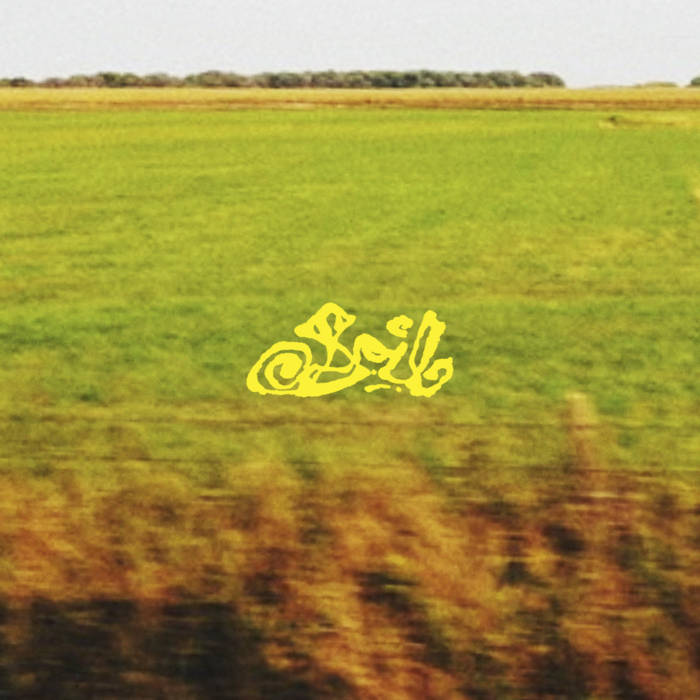


Today marks six years since the posthumous release of musician and composer Arthur Russell’s album, “Iowa Dream.”
Although cellist, avant-garde composer, and disco producer Arthur Russell received little to no commercial success during his lifetime, he left a lasting impression on New York City’s downtown music scene throughout the 1970s and 1980s. Before succumbing to an AIDS-related illness in 1992, he released several underground club tracks that went on to achieve cult status, while leaving behind a vast collection of unreleased recordings and compositions. To commemorate the release of “Iowa Dream,” I chose to reflect on the late artist’s musical career and personal life, which all began here in the Hawkeye State.
Arthur Russell was born in Oskaloosa, Iowa, on May 21, 1951. He was the youngest of three siblings and was raised in a conventional household. His father previously served as the mayor of Oskaloosa, and his mother was a cellist—an instrument Russell would eventually take up himself and continue playing for the rest of his life.
As a child, Russell was often described as shy and introverted. Despite his reserved nature, he developed a deep and profound love for music, taking up cello and piano while beginning to write his own musical compositions. At 16 years old, he left the confines of small-town Americana and dusty cornfields and headed for San Francisco.
Once Russell arrived in California, he joined a Buddhist commune and began to immerse himself in the music and teachings of Buddhism. Here, Russell went by the name Jigme and built a relationship with Yuko Nonomura, a spiritual teacher and Buddhist priest who would shape Russell’s unorthodox approach to music and the religion itself. Nonomura presented a photograph of a cloud to Russell, which would go on to inspire his set of compositional pieces titled Instrumentals.
Aside from studying Buddhism, Russell enrolled at the Ali Akbar College of Music and attended the San Francisco Conservatory of Music part-time. During this period, he met Beat poet Allen Ginsberg, whom he would accompany onstage, providing cello compositions as Ginsberg recited poetry. Through artistic collaboration and spiritual companionship, the two built a strong relationship. In 1971, Ginsberg brought Russell to New York City for a recording session. Much like San Francisco had done for Russell, New York City opened his mind to the growing and diverse musical landscape that awaited him. So, in June of 1973, he strapped his cello to his back and traded the sunshiny bay for the gritty, bustling East Side of Manhattan.
Upon his arrival in New York, Russell reminisced on the scenery he left behind in a series of letters he wrote back to a friend in San Francisco. One letter read, “It feels like the end of the American civilization, but I don’t want to make it seem any worse than it is.” (Lawrence, 2009, p. 53)
Although plagued by homesickness and a hint of doubt in his newly found home, he enrolled in the Manhattan School of Music. Residing in an apartment off West End Avenue, Russell bounced back and forth between midtown and downtown, as midtown offered discotheques, and downtown contained a slew of record companies. When a friend asked if Russell regretted his move, he replied, “No, New York is where it’s happening. San Francisco is nicer, but New York is where it’s happening.” (Lawrence, 2009, p. 53)
At the Manhattan School of Music, Russell was already demonstrating his ability to challenge conventional boundaries. He clashed with his music teacher, Charles Wuorinen, after composing a nonnarrative piece titled “City Park.”
“That’s the most unattractive thing I’ve ever heard,” Wuorinen replied after listening to the musical piece. Russell’s views differed from peers and instructors around him, highlighting the artistic differences between uptown modernism and the experimental sides of downtown where he hailed from.
Amid growing tensions between him and his teachers, Russell eventually dropped out of MSM; however, he continued to perform and write. He frequented Ginsberg’s apartment in the East Village often, and the two would exchange insights on musical composition and poetry. At the same time, Russell had grown close with Rhys Chatham, who had planned for Russell to succeed him as Music Director of The Kitchen.
The Kitchen is a non-profit avant-garde performance center downtown. First intended for video art, The Kitchen expanded to include other forms of art and performance. Initially hesitant about the opportunity, Russell accepted the position as Music Director. He programmed music events, organized concerts, and helped transform The Kitchen into a space for artists to express themselves.
In 1975, Arthur moved into an apartment situated right above Ginsberg’s on East Twelfth Street, where he would reside for the rest of his life. That same year, Russell left The Kitchen as Music Director; however, he continued to perform at the space and collaborate with other artists.
Aside from The Kitchen, Russell began frequenting the disco clubs in NYC’s underground dance scene. Paradise Garage, The Loft, and The Gallery all became spaces for Russell to experiment and expand beyond the musical genres that previously defined him. Although he was remembered as a “funny” dancer, he was captivated by disco music and the underground culture that surrounded it. Inspired by what he was hearing, Russell met with Nicky Siano, disc jockey and owner of The Gallery. The two went on to become collaborators on the 1978 cult-classic disco track, “Kiss Me Again.”
Released under the moniker Dinosaur, “Kiss Me Again” achieved praise from DJs and clubgoers in the underground scene; however, it lacked commercial success as it blended avante-garde with disco and didn’t align with the conformal structure of mainstream disco. This didn’t hinder Russell’s effort at writing dance songs, however, and he went on to collaborate with several artists under the name Loose Joints.
In 1980, Loose Joints released the track “Is it All Over My Face,” which also gained popularity among DJs and dance-floor audiences. Legendary DJ and dance music pioneer Larry Levan enjoyed the song so much that he remixed and contributed vocals to a second version, which became a staple at Paradise Garage. Although Russell’s dance tracks never achieved commercial success, his work was critical in the upbringing of club culture and dance music in New York City.
By 1980, disco had nearly faded away, but Russell continued weaving elements of the music genre into his compositions, as well as producing dance singles. The next decade of his life would be spent collaborating with artists on a multitude of different projects, records and performances.
In 1983, Russell released the instrumental album, “Tower of Meaning.” Produced by Phillip Glass (who had accompanied him on many projects in the past), the record served as a turning point in Russell’s music career. It went on to influence his 1986 album release, “World of Echo,” which is widely regarded as his most accomplished release. Much like “Tower of Meaning,” the album draws on minimalist classical structures and spiritual roots. However, Russell pushed further into experimental territory and included his own vocals, Indian classical music techniques and amplified cello.
Shortly after the release of “World of Echo,” Russell began experiencing unusual fatigue, prompting him to seek medical attention. After learning he was HIV-positive, Russell devoted himself to writing and recording as much music as possible, as he was unsure how much time he had left. Largely confined to his makeshift music studio inside his apartment, he kept his personal life private. He remained close to a small circle of people, however, including his long-term partner Tom Lee, his family, Ginsberg, and Glass. As his health deteriorated over time, Russell struggled to write and record songs. In 1991, he recorded what is believed to be the last song he ever wrote, titled “Love Comes Back.” Serving as an intimate and poignant love letter, the song was dedicated to Lee.
On the morning of April 4th, 1992, Russell passed away at Memorial Sloan-Kettering Cancer Center with Lee by his side. A private memorial event was held on April 12th, 1992, in Russell’s honor, and a range of artists, collaborators, friends, and family visited.
“Arthur’s new-music friends were there, and some dance people who came from a completely different world were there. All of these different worlds were colliding. It was only then that the full diversity of Arthur’s world became apparent to me,” said Arnold Dreyblatt, a composer, performer and longtime friend of Russell (Lawrence, 2009, p. 333).
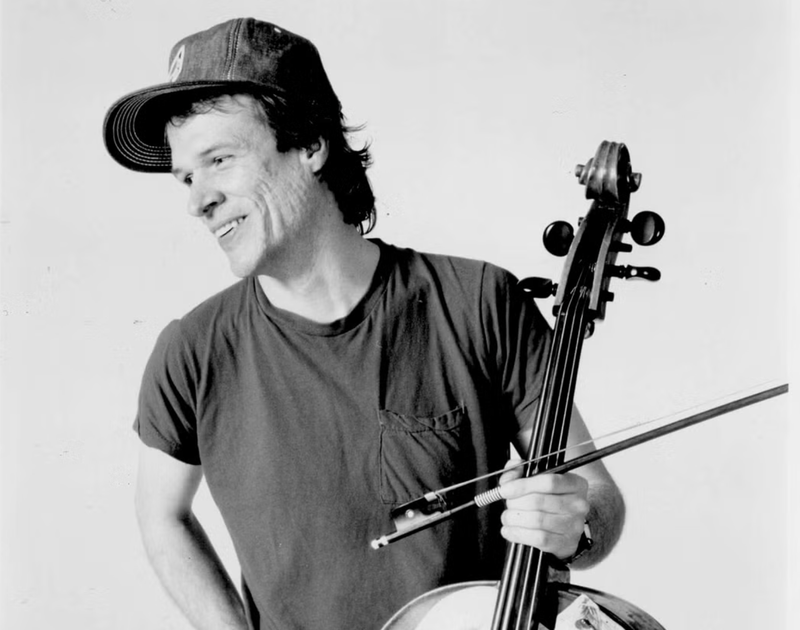
Photo From: Arthur Russell: Homage to the lost hero of dance and minimalism” by Jake Alden-Falconer, The Independent, 5 June 2015
In the end, it was evident how many people’s lives Russell touched. Though his reserved and quiet nature followed him through life, it never stopped him from exploring and pushing the boundaries of classical, progressive, pop, folk, rock, and disco. Decades later, Russell is celebrated for the interlacing of musical genres and his impact on notable artists, including Talking Heads, Grizzly Bear, LCD Soundsystem, Sufjan Stevens, Kanye West, and many more.
Lawrence, Tim. Hold On to Your Dreams: Arthur Russell and the Downtown Music Scene, 1973–1992. Duke University Press, 2009.
Stay tuned in with KRUI
Programming features, updates, special events, and more delivered right to you