

In the world of emergency response, seconds are the most important currency. But for over a decade, the funding used to shave those seconds off response times in Iowa has remained stagnant. Now, a coalition of the state’s top public safety leaders is warning that without more funds for the 911 operators, the system Iowans rely on in their most urgent times of need could face significant strain.
The proposal, being brought before lawmakers for the 2026 Legislative Session, calls for increasing the monthly 911 wireless surcharge from $1.00 to $1.15. While 15 cents might seem like pocket change, officials say it is the key to stabilizing a system that hasn’t seen a funding update since 2013.
“Costs have risen significantly for everything, yet 9-1-1 surcharges have not changed in over 10 years,” says Police Chief Chad McCluskey. This gap has left local emergency communication centers, Public Safety Access Points (PSAPs), that serve as the gateway for emergency services, struggling to keep up with modern technology and rising staffing costs.
Iowa isn’t alone in this struggle. Across the country, local governments are grappling with how to fund aging emergency infrastructure. In Colorado, Arapahoe County recently moved to increase its 911 surcharge to address similar shortfalls, while in Florida, the state’s Emergency Communications Board has faced intense pressure from counties to raise fees to cover the costs of regional dispatch centers.
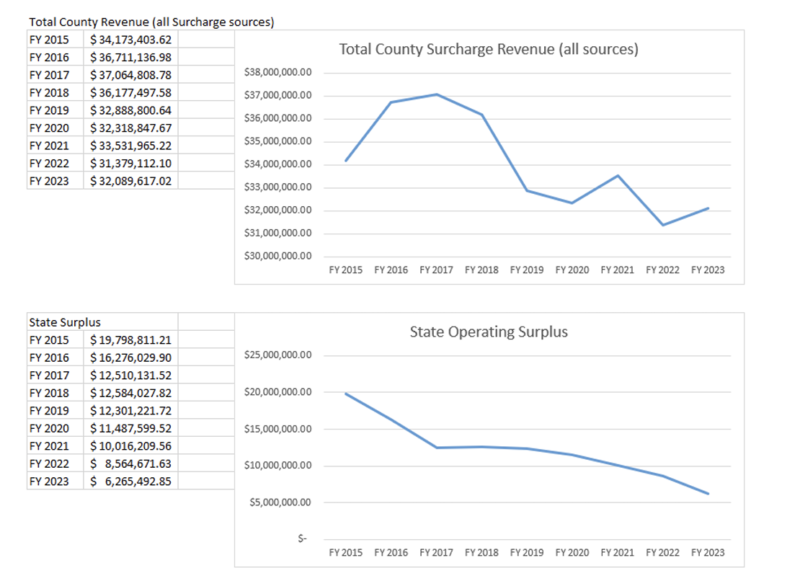
Image via 2023 Iowa 911 annual report
In Iowa, the situation reached a boiling point after the 2025 Legislative Session. Lawmakers passed a provision allowing the state to charge local 911 boards for “reasonable costs” of statewide operations. Rather than helping, leaders say this has imposed “significant financial strain” and created a cloud of uncertainty for local budgets.
The 15-cent increase is designed to create a sustainable, transparent funding model that doesn’t rely on local property taxpayers to fill the gaps. “This increase is long overdue,” says Chris Collins, President of Iowa NENA. “Our surcharge proposal provides a sustainable, fiscally responsible solution that strengthens Iowa’s 911 system and supports Iowa’s first responders.”
The funds are slated for more than just keeping the lights on. A major portion of the push is centered on “Next Generation 911,” a massive technological upgrade that allows for better location accuracy and digital communication. Todd Malone, president of Iowa APCO, notes that the adjustment “allows us to improve lifesaving technology without using additional taxpayer dollars. Investing in 911 is investing in the safety of every Iowan.”
To prevent another decade of stagnation, the proposal also includes a 2 percent annual inflation adjustment starting in 2027. The goal is to ensure that funding keeps pace with the world around it without requiring a massive, jarring leap in fees down the road.
Stay tuned in with KRUI
Programming features, updates, special events, and more delivered right to you